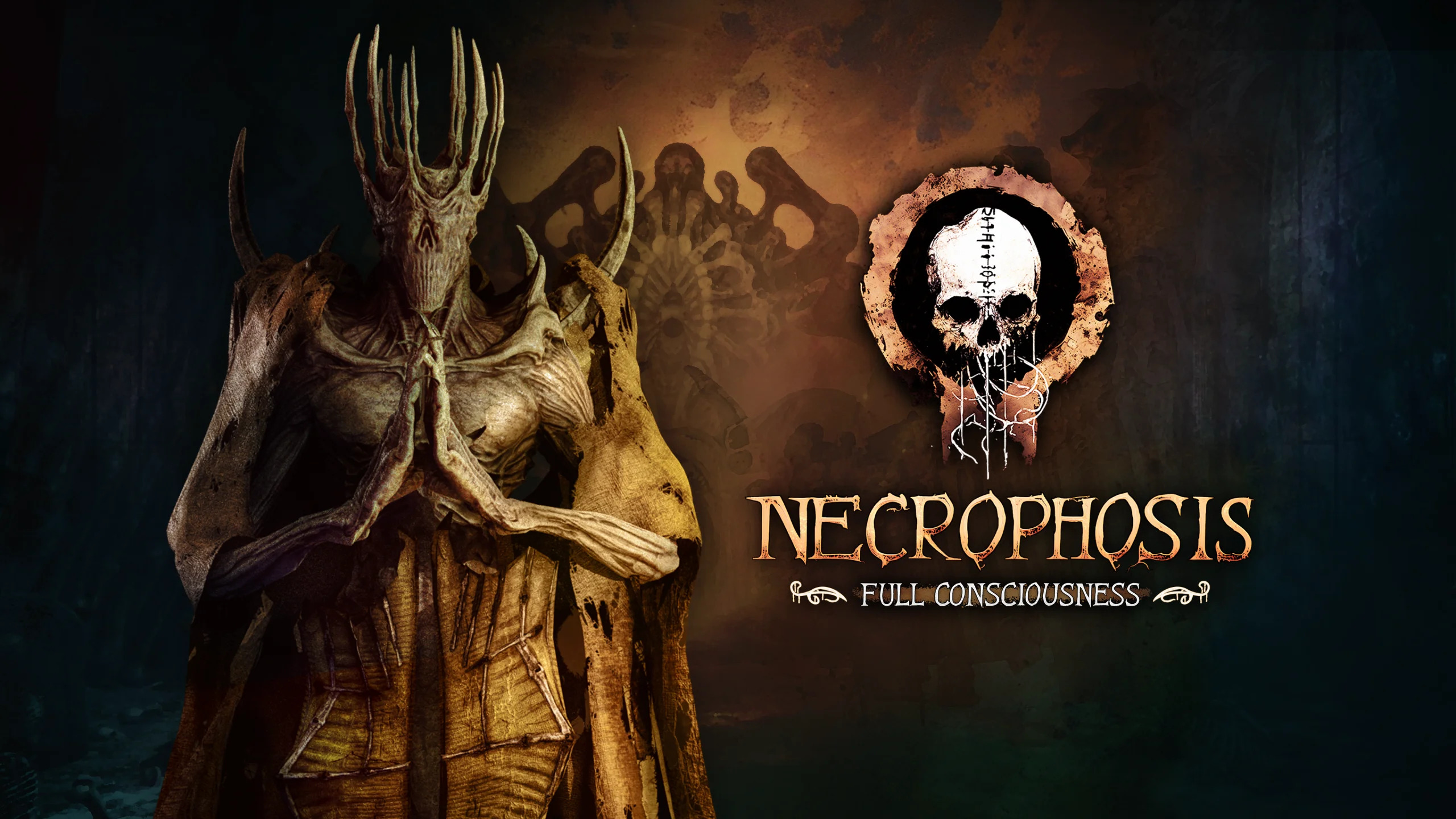
There are games that tell a story. There are games that challenge your reflexes. Then there’s Necrophosis, a title that appears determined to lock you inside a nightmare designed by someone who lost an argument with a philosophy textbook and never recovered.
Set in a universe where everything is dead, rotting and somehow still carrying on regardless, Necrophosis drops you into a world of flesh-covered architecture, endless suffering and dialogue that sounds like a GCSE poetry anthology after being left in a damp cellar for twenty years.
Gaming Heaven
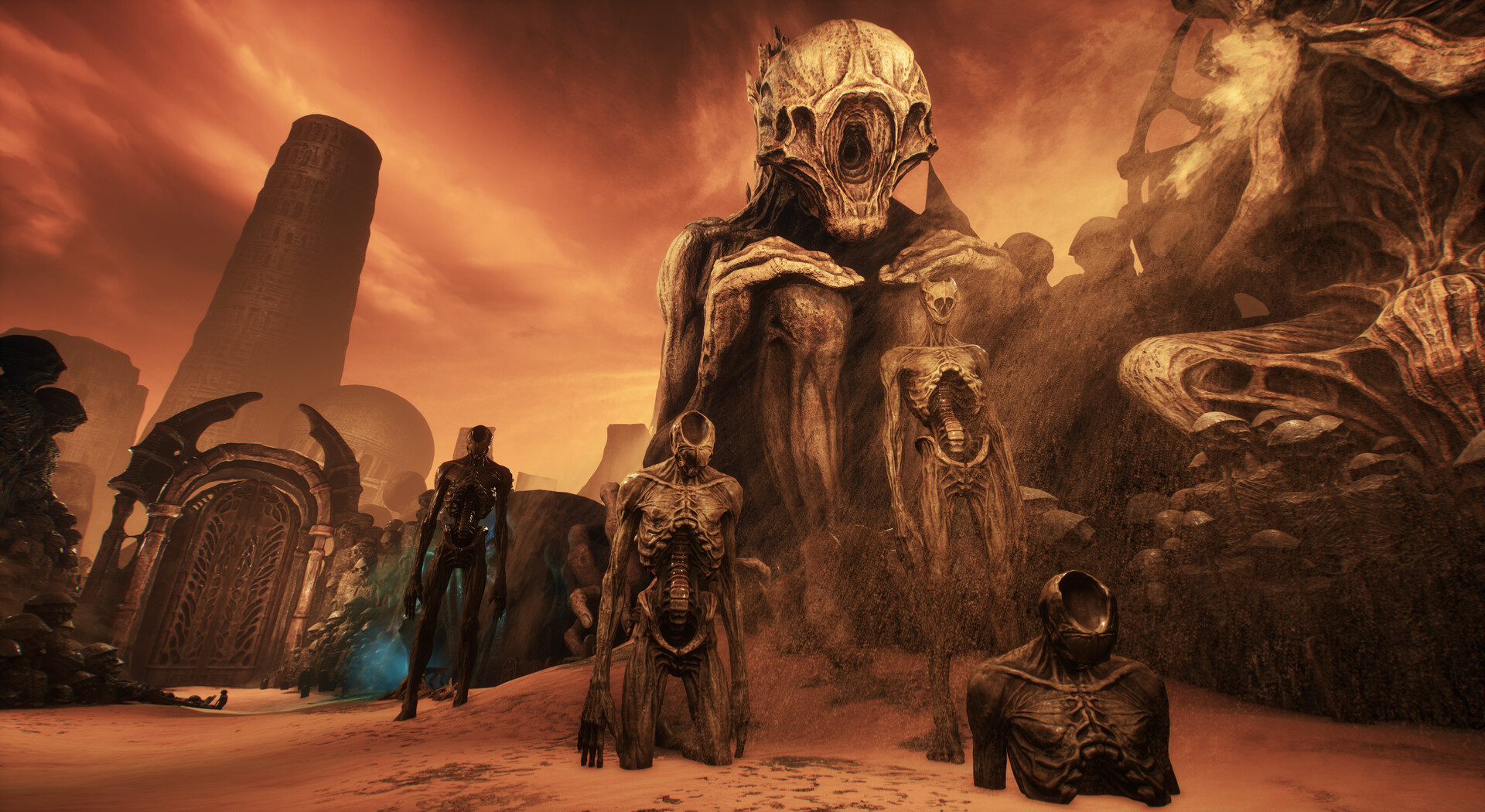
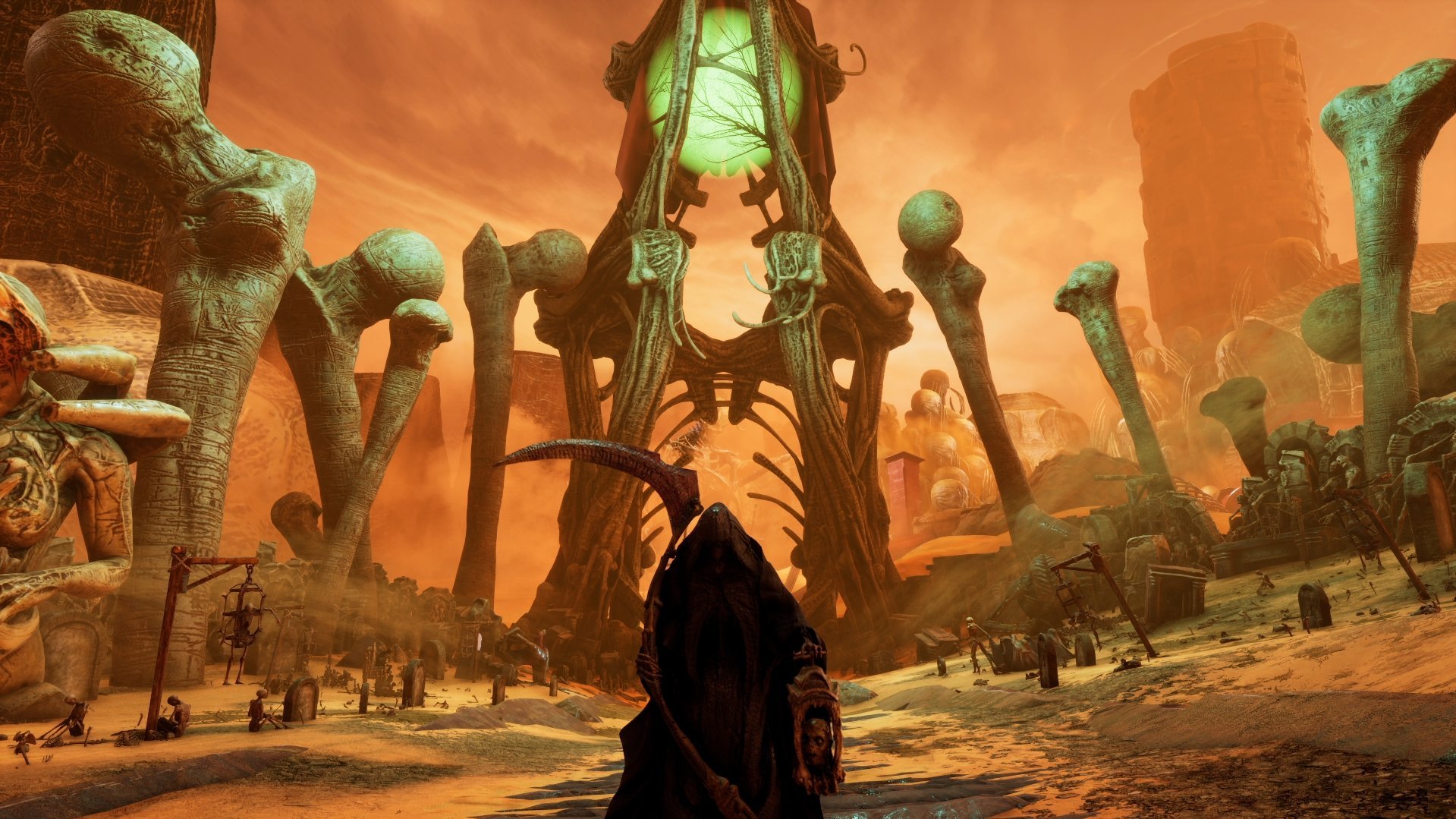
To give credit where it’s due, the visual design is extraordinary. Every area looks grotesque in a genuinely impressive way. Vast landscapes of bone, twisted organic machinery and towering abominations create some of the most disturbing scenery.
The sound design is equally effective. Whispers echo through the environment, ancient beings mumble cryptic nonsense, and the whole experience feels like being trapped inside a very expensive panic attack.
For the first hour or so, there’s a strange fascination in seeing what horrifying image awaits around the next corner. It’s a bit like visiting an art exhibition curated by someone who exclusively decorates with nightmares.
Gaming Hell
Unfortunately, once the initial shock wears off, you’re left with the awkward realisation that there isn’t actually much of a game here.
The gameplay consists largely of wandering around looking for obscure objects to place into equally obscure organic contraptions. Then you wander somewhere else and do exactly the same thing again. And again. And again.
The story doesn’t help matters. Characters speak almost entirely in riddles, vague prophecies and sentences that sound profound until you spend three seconds thinking about them. After several hours, I wasn’t uncovering a mystery so much as desperately hoping someone would explain what on earth was going on.
The puzzles are simplistic, the pacing crawls along, and the expansion content is so brief it feels less like a major addition and more like something accidentally left on the disc.
Worst of all, Necrophosis mistakes obscurity for intelligence. Every moment feels convinced it’s saying something important, while refusing to communicate what that might actually be.
Final Judgement
Necrophosis is visually stunning but mechanically lifeless. Beneath the grotesque artistry lies a repetitive walking simulator wrapped in layers of self-important nonsense.