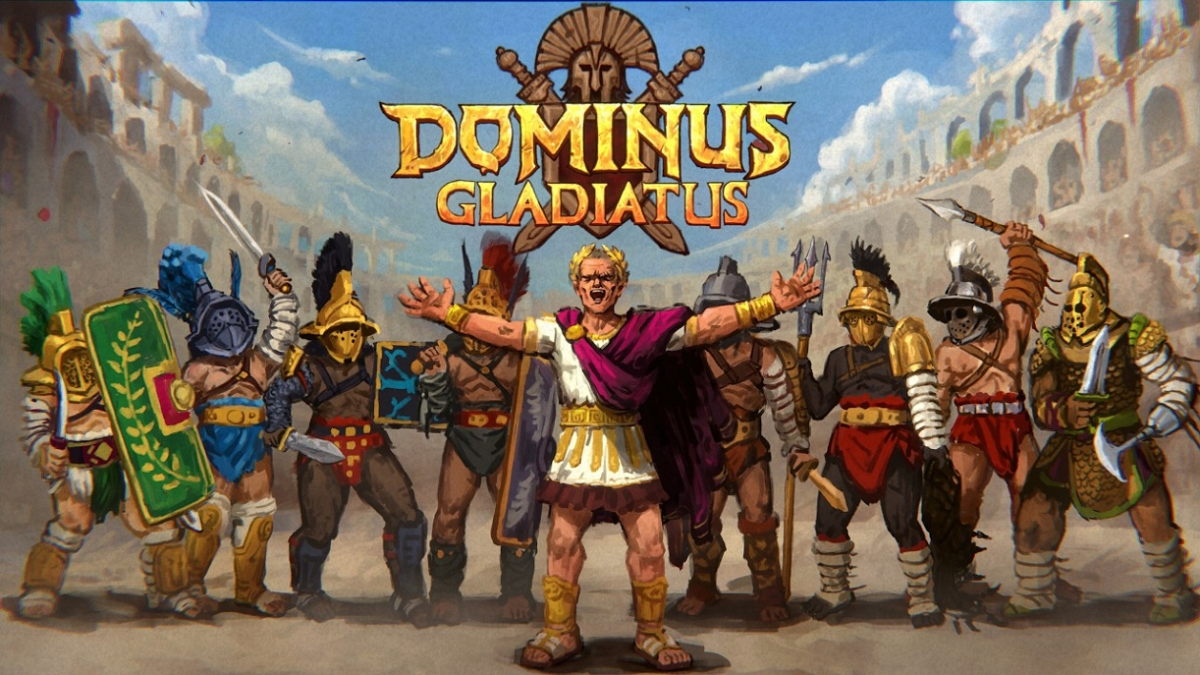
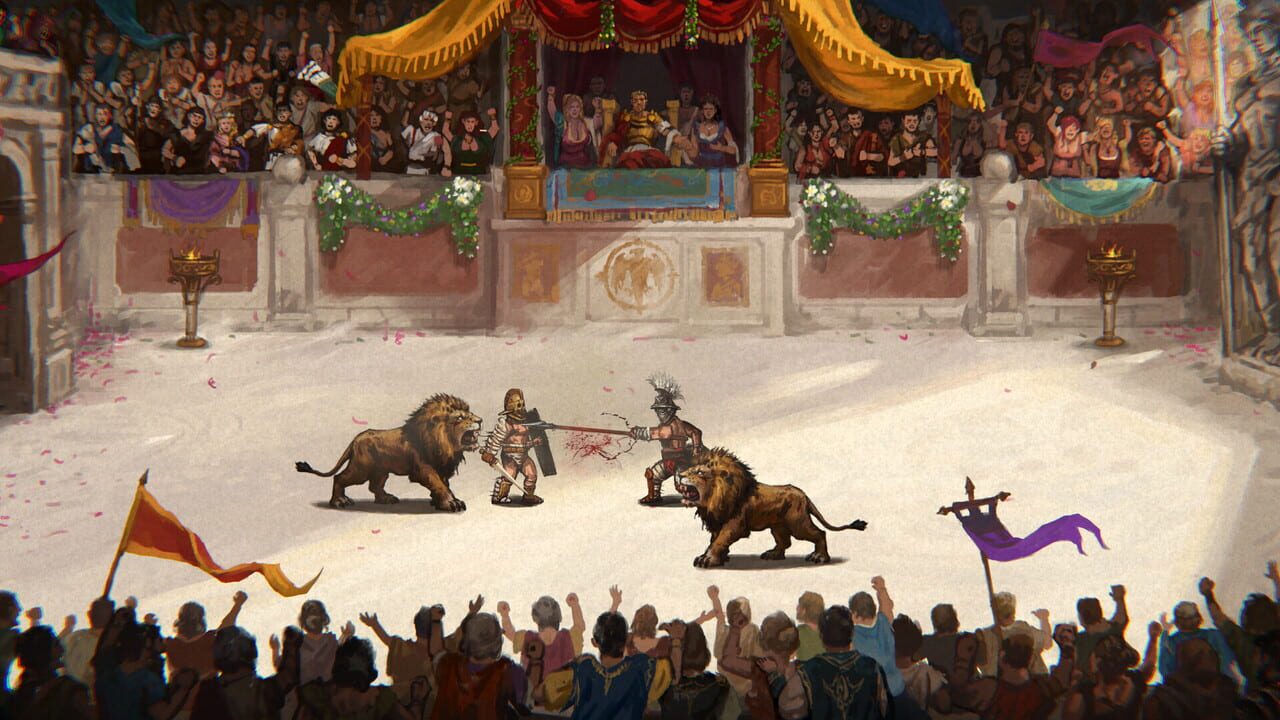
Dominus Gladiatus takes us back to ancient Rome, where owning a gladiator school apparently involves considerably more paperwork than you’d expect. You’re tasked with recruiting fighters, managing their training and finances, and sending them into increasingly dangerous arena battles. It’s an interesting premise, although being responsible for a collection of professional stabbing victims isn’t quite my idea of a relaxing management experience.
Gaming Heaven
There is some genuine depth here. Gladiators have individual statistics covering health, fatigue and morale, alongside different fighting styles, weapons, armour and upgrade options. You’re also able to employ staff and construct facilities to improve your operation. In theory, there’s plenty to get your teeth into.
The six available Domini offer different advantages, while the campaign’s roguelike structure adds some tension. Battles arrive at regular intervals, and losing a major confrontation brings your entire run to an abrupt end. It’s an effective way of making every decision feel important, even if watching somebody get murdered because you’ve mismanaged their training schedule isn’t particularly uplifting.
Gaming Hell
Unfortunately, the game quickly becomes an exhausting exercise in spreadsheet management dressed up in sandals. The narrative is practically non-existent, with little more than basic text and occasional animated sequences providing context. Anyone hoping for an engaging Roman adventure should probably look elsewhere.
Campaigns also last just two or three hours, which makes the repetitive management cycle feel rather limited. There’s plenty to monitor, but the constant juggling of morale, finances, injuries and equipment can become tedious. The simulated battles offer little excitement once you’ve seen the same basic spectacle repeatedly. Apparently, watching men fight to the death is less entertaining when you’re not actually involved.
Final Judgement
Dominus Gladiatus has an unusual concept, but its management systems feel more like work than entertainment. The lack of narrative, repetitive battles and limited campaign length make it difficult to recommend wholeheartedly. There’s a decent idea buried beneath all the administration, but I didn’t particularly enjoy digging for it. Rome wasn’t built in a day, and this game certainly doesn’t make running it enjoyable.